Pain that shoots down the back of your leg is usually called “sciatica.” But sciatica describes a symptom — irritation of the sciatic nerve — not the cause. And the cause matters, because it decides what will actually help.
Two of the most common sources I see are the low back and a small hip muscle called the piriformis.
The sciatic nerve’s long journey
The sciatic nerve starts as several nerve roots leaving the lower spine. They join into one thick nerve that travels through the pelvis, passes beside (and in some people, through) the piriformis muscle deep in the buttock, then runs down the back of the leg.
Irritation anywhere along that path can cause similar symptoms: pain, tingling or numbness down the leg. So we have to play detective.
When it starts in the spine
Typical signs:
- Back pain and leg pain, often with the leg pain below the knee
- Worse with bending forward, sitting, coughing or sneezing
- Sometimes numbness or tingling in specific parts of the foot
Common causes: a bulging or herniated disc, a stiff and inflamed joint in the low back, or narrowing around the nerve root.
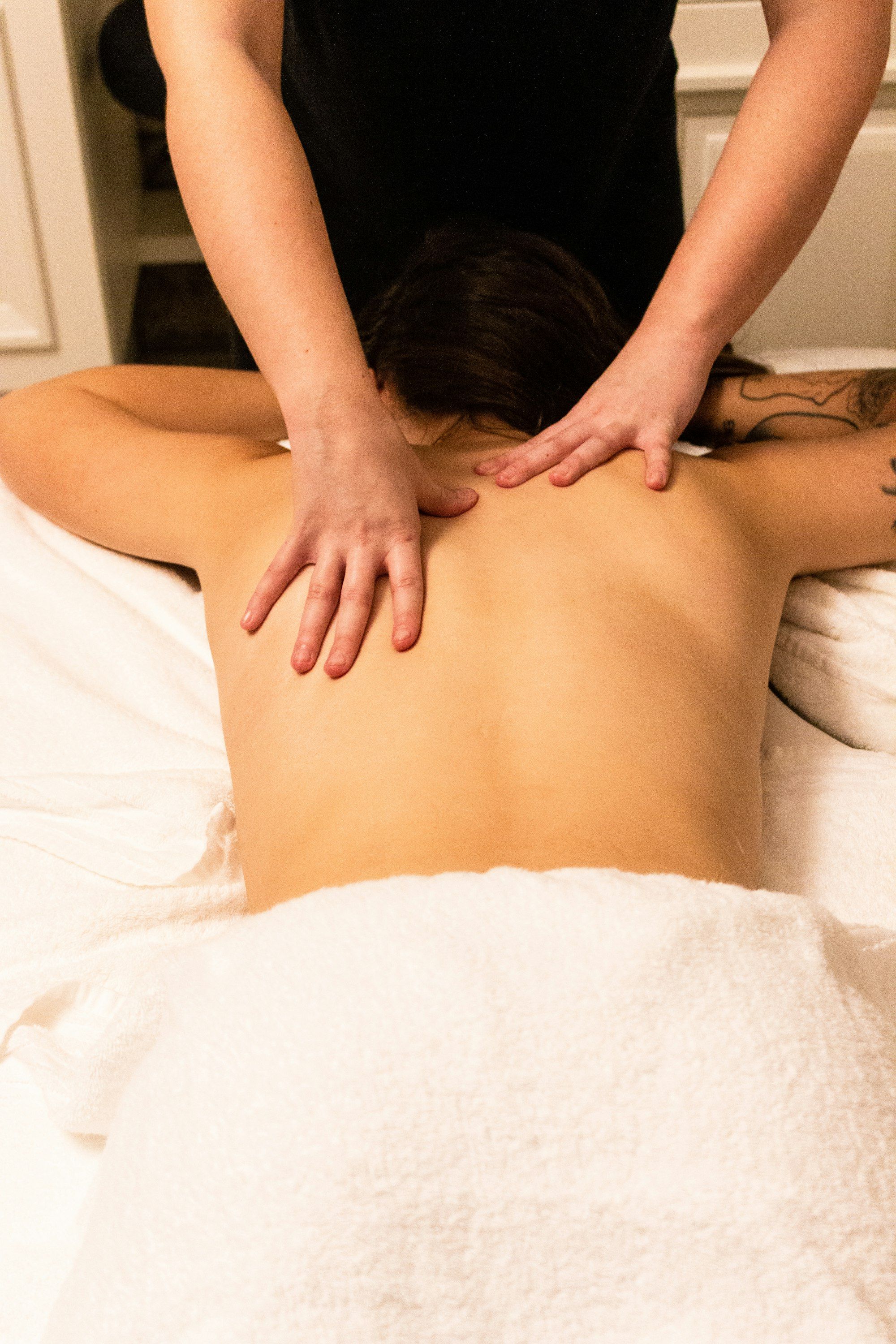
What helps: gentle, disc-friendly chiropractic techniques, positions and exercises that take pressure off the nerve, and soft-tissue work for the muscles guarding the area.
When it starts in the hip
Typical signs:
- A deep ache in one buttock, often the worst spot
- Worse with long sitting, especially on a hard seat or a wallet
- Pain when climbing stairs, running or crossing your legs
- Often little or no actual back pain
Common causes: a tight or overworked piriformis, often from weak glutes, stiff hips or long hours sitting.
What helps: focused massage and trigger point work on the piriformis and hip rotators, gentle adjustments to the pelvis and hip, and stretching and glute strengthening.
Why getting it right matters
If the problem is in your hip, cracking your back won’t do much. If it’s a disc, aggressively stretching your hip might aggravate it. That’s why my first visit always includes a careful exam. A few simple movement and nerve-tension tests usually point to the source.
Often it’s a bit of both: a stiff low back makes the hip muscles work harder, and a tight hip changes how the back moves. That’s where combining chiropractic and massage in one visit really helps.
When to get help right away
See a medical provider urgently if leg pain comes with loss of bladder or bowel control, numbness in the groin or inner thighs, or rapidly worsening leg weakness.
For everything else, you don’t have to guess. Call or text (949) 680-9775, and let’s find out where your pain is really coming from.
— Dr. Beth
This article is general education and isn’t a substitute for an exam or personal medical advice. If you have severe or worsening symptoms, see a medical provider.